
A Simple DIY Solution for Eroding Stream Banks
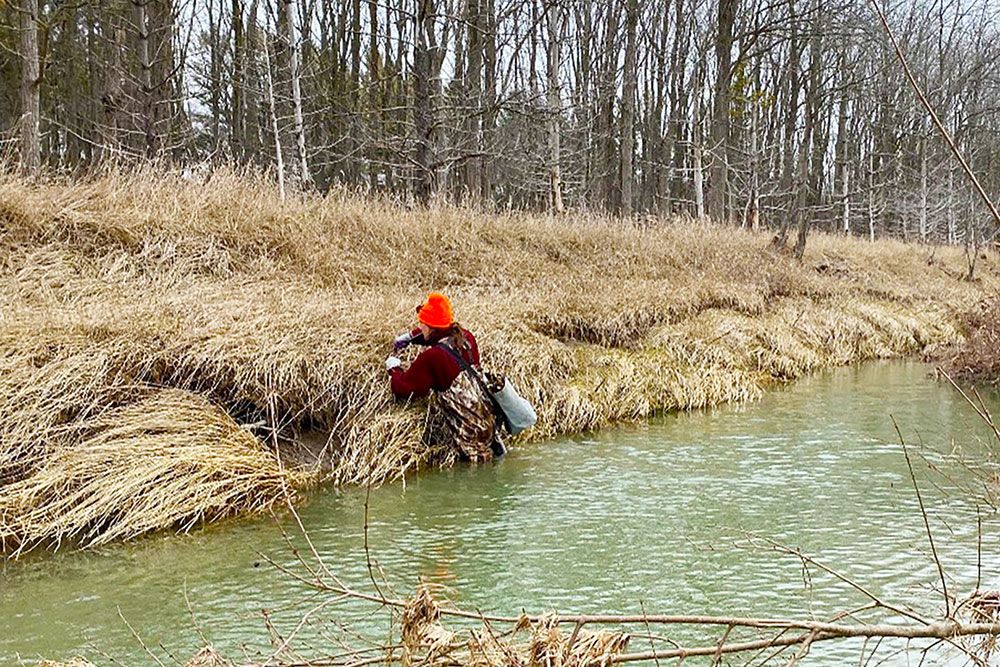
A Simple Do-It-Yourself Solution for Eroding Stream Banks
Submitted by Maitland Conservation
Did you know there’s a simple, do-it-yourself way to help stabilize eroding stream banks?
It seems we’ve been receiving more calls from landowners concerned about stream bank erosion lately. While many people think of using rock to reduce the force of flowing water, there’s another option that’s completely free, requires no permits, and provides valuable habitat for fish and wildlife.
The technique is called livestaking. It involves planting cuttings from native shrubs that can root and grow into new plants. Native species commonly used for livestaking include Red-osier Dogwood, Pussy Willow, Sandbar Willow, and Heart-leaved Willow. These species establish quickly, so they’re ideal for stabilizing stream banks. Their roots help hold soil in place, reducing erosion and sediment entering waterways, which helps improve water quality. As the plants mature, they also provide shade that helps keep streams cooler for fish.
NOTE: Be sure to use only native species of plants, as non-native willows, such as Weeping Willow and Crack Willow, can spread aggressively.
Getting Started:
- Where: Look for existing shrubs on your property or ask permission from your neighbours if you see species that interest you.
- Timing: Plant during dormancy (late autumn, winter, or early spring).
- Cuttings: Use healthy branches about ¼ inch in diameter and 1-2 feet long.
- Storage: Keep cuttings cool and moist if not planting immediately.
- Spacing: Plant 1–2 feet apart.
- Depth: Try to get at least 2/3 of the cutting in the ground, and use a piece of rebar to pre-make the hole.
- Tip: Cut the planting end at an angle and keep it in water until planting.
- With just a few cuttings and a little effort, livestaking is an easy, low-cost way to reduce erosion, improve water quality, and create healthier streamside habitat.
With just a few cuttings and a little effort, livestaking is an easy, low-cost way to reduce erosion, improve water quality, and create healthier streamside habitat.
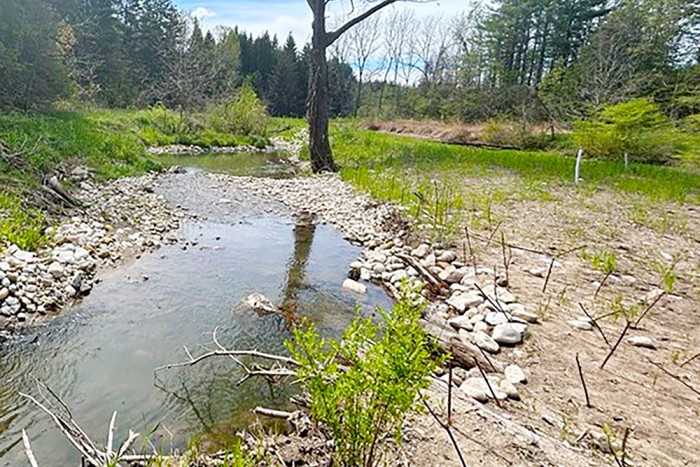
Before photo of a livestake planting of Red-osier Dogwood along Naftel’s Creek to stabilize soils.
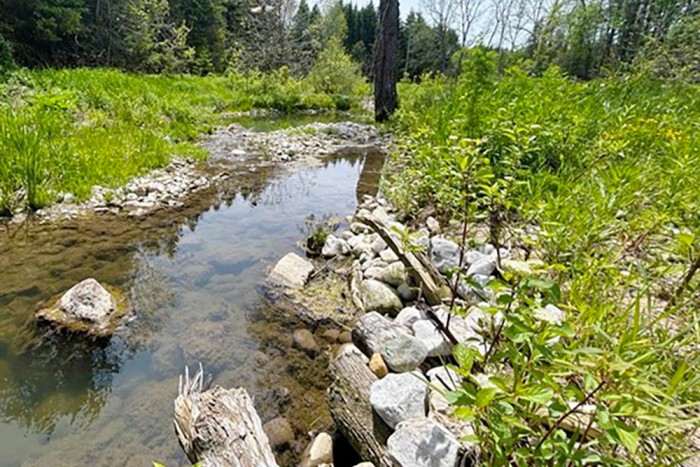
After photo of a livestake planting of Red-osier Dogwood along Naftel’s Creek to stabilize soils.
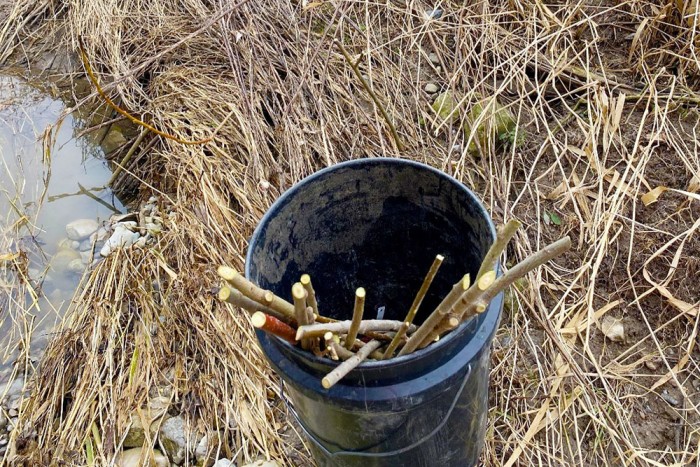
Bucket of native-species Willow and Dogwood stakes to add into river bank.